Archive
All Resources
A comprehensive collection of legal insights, research, and academic works.

Jurimetrics BY Herbert Solomon
Jurimetrics represents the systematic application of quantitative methods, particularly statistics and probability theory, to legal problems. Coined by Lee Loevinger in 1949 and elaborated by Herbert Solomon in his foundational 1968 article, the field challenges the traditional assumption that legal reasoning is purely qualitative and intuition-based. This paper examines the concept of jurimetrics, its intellectual origins, its definitions by key scholars, and its practical application across criminal, civil, and administrative law settings. The discussion draws primarily on Solomon's analysis while incorporating perspectives from Loevinger and related scholars to assess the promise and limits of quantitative legal reasoning.
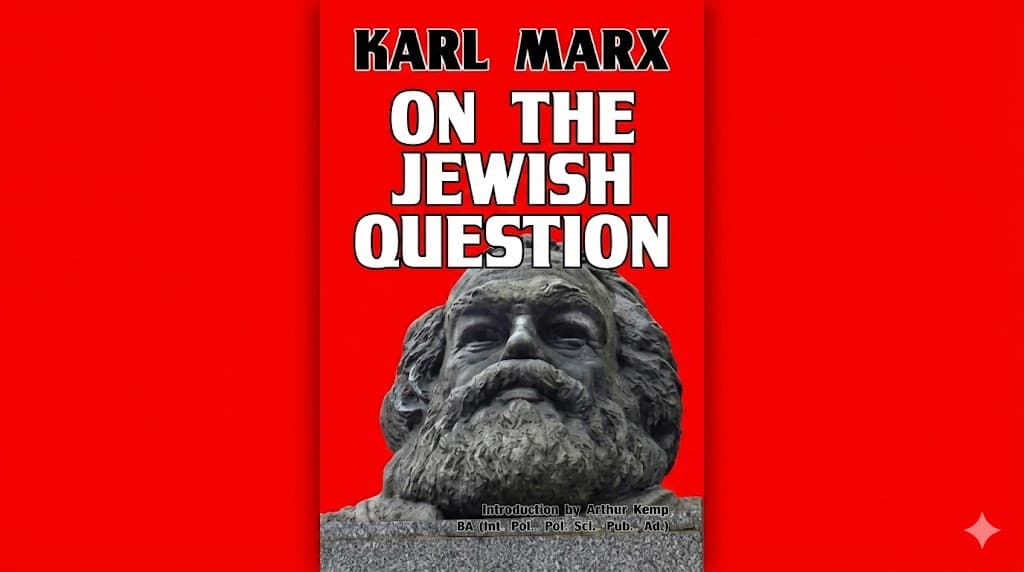
Karl Marx's On the Jewish Question (1844) A Critical Book Review from the Perspective of Socialist Jurisprudence
Karl Marx's On the Jewish Question (1844) is one of the earliest and most influential works in the development of Socialist Jurisprudence and Marxist political philosophy. Written as a critique of Bruno Bauer's arguments on Jewish emancipation in Germany, the essay extends beyond religious freedom and addresses broader questions concerning the state, political emancipation, human emancipation, private property, and the relationship between civil society and political society. The work occupies a significant position in Marx's intellectual development because it marks his transition from the idealism of G.W.F. Hegel to historical materialism. It marks a pivotal transition in his thinking away from abstract philosophy toward the materialist and economic theories that would later define Marxism. Marx argues that political emancipation, although an important achievement of modern constitutional states, does not amount to complete human emancipation. True freedom requires the abolition of social and economic structures that create alienation and inequality. From the perspective of Socialist Jurisprudence, On the Jewish Question is particularly important because it presents Marx's early critique of liberal rights, the capitalist state, and private property. The book remains relevant in contemporary debates concerning secularism, minority rights, citizenship, and the relationship between law and social justice.
LAW FINDING THROUGH EXPERIENCE AND REASON: ROSCOE POUND'S THREE LECTURES
ABSTRACT Roscoe Pound’s Law Finding Through Experience and Reason explains sociological jurisprudence through three lectures on how law is discovered rather than simply made. Its main idea is that “law is experience developed by reason and corrected by further experience,” showing that law grows through the interaction of real social life and judicial thinking. Pound distinguishes between “law,” which refers to general principles based on experience, and “laws,” which are formal rules made by the state. He discusses stare decisis (precedent) and explains that it is important for stability but should not be followed blindly if it leads to injustice or outdated results. He also explains the difference between reason and reasoning, warning that strict logical thinking or weak analogies can lead to unfair decisions. By engaging with different schools of legal thought, Pound promotes a practical and flexible approach to law that considers social needs and changing conditions. Overall, he presents law as a continuous process shaped by experience, reason, and judicial practice. Keywords: Roscoe Pound, sociological jurisprudence, law finding, experience and reason, stare decisis, judicial reasoning, legal realism, legal philosophy, analogy in law, judicial discretion
LEGISLATIVE REVIEW OF FOREST ACT, 2076
Forests constitute one of the most vital natural resources of Nepal and play a significant role in maintaining ecological balance, conserving biodiversity, regulating climate, protecting watersheds and supporting sustainable economic development. Following the establishment of the federal democratic republican system, the restructuring of governmental powers among federal, provincial and local levels created the necessity for reformulation of forest governance laws consistent with constitutional federalism. In this context, the Forest Act, 2076 (2019) was enacted by the Federal Parliament of Nepal to modernize and consolidate the legal framework relating to forest conservation, management, utilization and environmental governance, replacing the earlier Forest Act, 2049 (1993). The Act was authenticated on 27 Ashwin 2076 (14 October 2019) and was enacted pursuant to the constitutional principles embodied in Articles 51(g) and 119 of the Constitution of Nepal. The legislation introduces modern legal concepts relating to sustainable forest management, environmental services, climate change mitigation, biodiversity protection, eco-tourism, scientific forest governance and participatory forest administration. The preamble of the Act expressly states that the legislation was enacted to make legal provisions relating to protection, promotion, utilization and management of forests and biological diversity in order to maintain environmental balance and contribute to sustainable development. This legal research report constitutes a critical academic review of the Forest Act, 2076 based upon legislative analysis, environmental jurisprudence and principles of natural resource governance. The review is structured around major grounds including context of enactment, linguistic formulation, structural framework, impact assessment, shortcomings and concluding observations. The study adopts an analytical and doctrinal approach to evaluate both the normative objectives and practical implementation challenges of the legislation within Nepal’s evolving federal legal system.
A RESEARCH PAPER ON CASES RELATING TO THE LEGAL PROFESSION IN NEPAL
This paper examines the legal profession in Nepal through the study of selected case laws. It briefly outlines the historical and regulatory background of the profession and then focuses on how courts have interpreted the duties, ethics, and responsibilities of legal practitioners. The cases discussed illustrate issues such as professional conduct, conflict of interest, courtroom responsibility, and the role of advocates in the administration of justice. By analysing judicial reasoning in these decisions, the paper shows how case law contributes to defining professional standards and guiding the behaviour of lawyers. The study also highlights how courts reinforce the idea that legal practitioners are officers of the court and must act in accordance with ethical and procedural obligations. Overall, the paper demonstrates that judicial precedents play an important role in shaping accountability, discipline, and public confidence in the legal profession in Nepal. Key words: Legal Profession; Nepal Bar Council; Professional Ethics; Legal Practitioners; Judicial Discipline; Conflict of Interest; Advocacy Standards; Administration of Justice; Legal History Nepal; Supreme Court Jurisprudence.
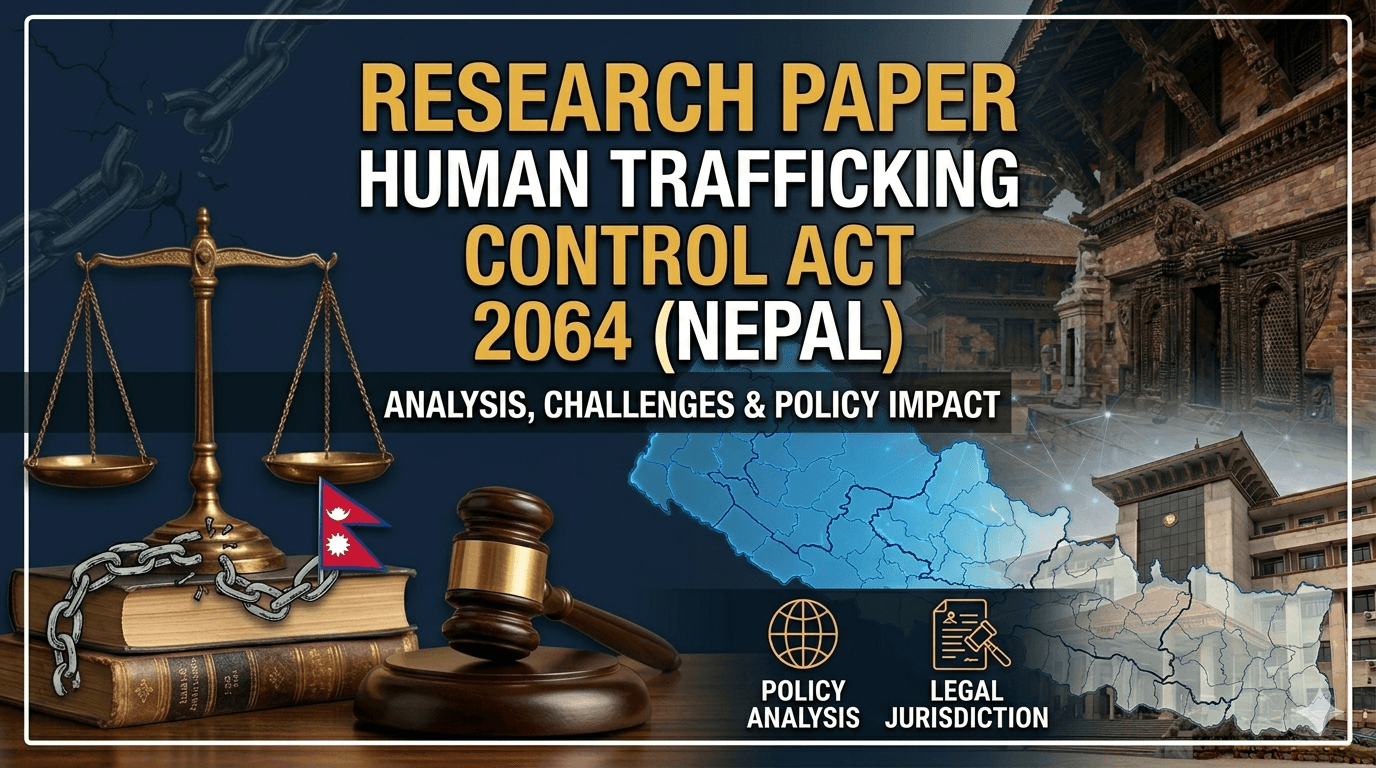
An Analysis of the Human Trafficking and Transportation (Control) Act, 2064
Human trafficking is a severe transnational crime and a fundamental human rights violation that persists despite national and international legal frameworks. Nepal, as a source, transit, and destination country, remains highly vulnerable due to economic disparities, political instability, and porous borders. The Human Trafficking and Transportation (Control) Act, 2064 (2007) serves as the principal legal framework to combat trafficking in Nepal; however, challenges in enforcement, judicial interpretation, and victim protection continue to hinder its effectiveness. This study provides a critical analysis of the Act, its implementation, and its alignment with international legal standards. By examining judicial decisions, legislative frameworks, and policy gaps, the research evaluates the strengths and weaknesses of Nepal’s legal response. Through a qualitative and doctrinal methodology, including an assessment of Supreme Court rulings, legal provisions, and secondary sources, this study highlights key obstacles in law enforcement, victim rehabilitation, and cross-border trafficking prevention. Findings suggest that while Nepal has made legislative advancements, weak enforcement mechanisms, lack of inter-agency coordination, and socio-cultural stigmas continue to impede progress. The study recommends policy reforms, enhanced victim support mechanisms, and stronger regional cooperation to address trafficking challenges comprehensively. This research contributes to the growing discourse on human trafficking in Nepal and aims to provide actionable insights for legal and policy enhancements.

Constitutional Doctrines and Prime Minister Appointment
संवैधानिकरूपमा प्रतिनिधिसभा बाहिरको व्यक्तिलाई प्रधानमन्त्री नियुक्त गर्न सकिँदैन भने पनि, संकटकालीन अवस्थाले *extra-ordinary constitutional interpretation* आवश्यक पर्न सक्छ। यसका लागि विश्वभर विकसित भएका विभिन्न constitutional doctrines प्रयोग गरेर राष्ट्रपति वा सर्वोच्च अदालतले आधार बनाउन सक्छन्।

लोकतान्त्रिक शासनको मेरुदण्ड: निर्वाचन प्रणाली (election process in nepal)
नेपाल अहिले राजनीतिक रुपमा संवेदनशील र अस्थिर अवस्थामा रहेको छ। हालैको घटनाक्रमअनुसार, प्रतिनिधि सभा विघटन भइसकेको छ र देशको कार्यकारी नेतृत्व अन्तरिम प्रधानमन्त्रीको नेतृत्वमा रहेको छ। राष्ट्रपतिले प्रधानमन्त्रीको सिफारिसमा मन्त्रिपरिषद् गठन गरी देशको प्रशासन चलाइरहेको भए पनि संघीय संसद विघटन पछि संवैधानिक र निर्वाचन सम्बन्धी प्रक्रिया नयाँ चुनावतर्फ अघि बढाउन आवश्यक रहेको छ।नेपाल निर्वाचनको इतिहास र वर्तमान कानूनी संरचना अनुसार प्रतिनिधि सभा निर्वाचन संचालनको अधिकार संविधान, प्रतिनिधि सभा सदस्य निर्वाचन ऐन, निर्वाचन आयोग ऐन, र सम्बन्धित नियमावली मार्फत व्यवस्था गरिएको छ। हाल निर्वाचनको मिति तोकिएको छ र देश आगामी निर्वाचनतर्फ अग्रसर छ। तर, वर्तमान राजनीतिक परिप्रेक्ष्यमा सरकारले आकस्मिक अवस्था, आपतकालीन स्थिति वा अन्तरिम व्यवस्थापनका लागि फरक नियम, आदेश वा अध्यादेश जारी गर्ने सम्भावना पनि रहन्छ। यस अध्ययनको उद्देश्य नेपालको चुनाव सम्बन्धी कानुनी प्रावधान र संविधानको व्याख्यालाई आधार मान्दै विश्लेषण गर्नु हो। यस लेखमा प्रस्तुत सामग्रीहरू सिर्फ़ संविधान, प्रतिनिधि सभा सदस्य निर्वाचन ऐन, निर्वाचन आयोग ऐन, र सम्बन्धित नियमावली अनुसारको वैधानिक व्याख्यामा आधारित छन्। त्यसैले, यस अनुसन्धानको निष्कर्षहरू वर्तमान संवैधानिक र कानूनी ढाँचामा आधारित रहेका छन्, तर देशको राजनीतिक परिस्थिति र आकस्मिक अध्यादेश वा फरक नियम लागू हुने परिस्थितिमा व्यावहारिक रूपमा केही भिन्नता आउन सक्छ।

Monarchy vs Democracy: Nepal’s Situation to Adopt Monarchy and Debates
Nepal is a landlocked country situated in South Asia, with a rich cultural and political history. Nepal abolished its monarchy in 2008 and became a federal democratic republic. However, in recent years, there have been debates and discussions regarding the reintroduction of the monarchy in Nepal. This blog post will explore the arguments for and against the adoption of monarchy in Nepal.